ECOLOGY IN PRACTICE
The use of pro-ecological solutions is today a priority in shaping the policy of many enterprises. The American company Armstrong can consider itself a pioneer in this field, as it has been successfully supporting sustainable development for 150 years
 |
| ECOLOGY IN PRACTICE |
The Armstrong company, a world leader in the design and production of suspended ceilings, is becoming an authority in the category of a socially responsible company. Large-scale pro-environmental activity has almost become the company's flagship. The area of eco-activity includes both a consciously conducted internal environmental policy and support for external projects aimed at protecting the environment.
Internal regulations
The first pro-ecological activities were undertaken by the Armstrong company as early as 1860. Their goal was to develop a process that would make it possible to recover cork waste. The success of the project led to the creation of a new product that is still known today as linoleum. Currently, Armstrong is operating in accordance
with a standardized internal policy based on CSR and sustainable development. It focused its goals primarily on researching new technologies, selecting the least harmful energy sources and materials, and manufacturing products that meet the expectations of consumers and are safe for the environment.
The actual results of the implemented projects are evidenced by the fact that Armstrong has obtained many certificates, e.g. ISO 14001 and ISO 9001 - the former confirms the commitment to care for the natural environment, while the latter confirms the high quality of the products.
Eco-solutions
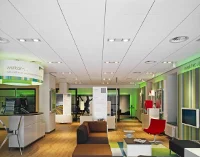 |
| Ultima Vector |
Armstrong products are designed using modern technologies and environmentally friendly materials. For the production of suspended ceilings, renewable raw materials are used, as well as those that occur in large quantities in the natural environment (e.g.: biosoluble mineral wool, perlite, natural starch, paper, clay). An important component of the new products are also used suspended ceilings and waste generated during assembly. In mineral ceilings, the content of recovered raw materials is up to 82%, in metal ceilings - 30%, and in suspension systems - 25%.
In selected countries, including in the UK, there is a scheme to take back used ceilings and installation waste, which is then recycled. To date, 8 million m 2 of dismantled products have been processed. As a result, 40,000 tons of waste went to landfills. tons less waste. The ceiling recycling program also resulted in energy savings of 45 million kWh – enough power to run a standard household for 3 years!
First of all, act
 |
| ECOLOGY IN PRACTICE |
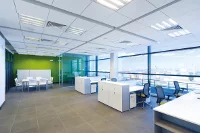
Armstrong actively supports environmental protection projects. Since 1998, it has been participating in the Gas Emissions Reduction Project, the main objective of which is to reduce energy consumption during the production of products. As a result, CO 2 emissions were reduced by over 120 million kg in one year.
In addition, the company is committed to the design and implementation of intelligent and environmentally friendly buildings. These are objects that they draw energy from natural sources, such as: deep wells, windmills or solar batteries. A perfect example is the company's headquarters located in Lancaster, Pennsylvania, which is 75% powered by wind energy.
| Do you know that…? Armstrong recently became a member of the UK Green Building Council, and is a founding member of the US and India Green Building Councils, and a member of the Canada, China and Austria Councils. In 2007, the Armstrong headquarters building in Lancaster (Pennsylvania, USA) was awarded the LEED-EB Platinum Building certification (for an existing building) - the highest and most difficult rating to obtain. LEED (Leadership in Energy and Environmental Design) is an American, multi-criteria building rating system, which was introduced by the non-profit organization USGBC (US Green Building Council), whose goal is to promote and set standards for green construction, which is currently the main direction in the construction industry . The assessment covers existing and emerging commercial and residential buildings, as well as their surroundings and interiors. The evaluated building is awarded points (maximum 100), on the basis of which one of four certified levels is determined: LEED Certified, LEED Silver, LEED Gold and LEED Platinium. |