Wall revolutions - preparation of walls for decoration
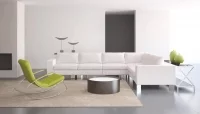 Changing the appearance of the walls is not only the choice of paint color or wallpaper pattern, but also the proper preparation of the surface on which we will apply a new decoration. By investing time and money, we want to be sure that the result of the work carried out will be durable and as close to our expectations as possible. How to prepare a wall revolution so that home interiors gain an impressive look for a long time - advises Maciej Iwaniec, an expert at Baumit, a reputable manufacturer of building materials.
Proper shaping of walls and ceilings is an essential element in creating aesthetic interior arrangements. Even and well-bonded planes greatly affect the final appearance of the decoration, eliminating the risk of unsightly imperfections. Dedicating attention and resources to the proper preparation of these surfaces is an investment whose visible effects will last for a long time.
Proven methods in modern versions
“One of the most popular wall finishing technologies in interiors is plastering them. The advantage of this method is primarily the thickness of the plaster itself, which helps to compensate for any unevenness in the wall. This layer is also an excellent base for various types of materials, responsible for the final appearance of the arrangement.” – says Maciej Iwaniec, an expert at Baumit and emphasizes: “Gypsum and cement-lime plasters are commonly used today. The former allow you to obtain the effect of a smooth surface, while the latter give it a traditional appearance of a troweled material with varying degrees of graining. The choice of the right solution depends on whether the planned decoration will cover the texture of the plaster or use its characteristic appearance.”
“If we are going to paint a prepared wall with paint, we should choose plasters and gypsum finishing coats. Making an even surface with these materials provides a much finer grain than in the case of cement-lime mixtures, but it allows you to start painting directly on plastered walls. If, however, we plan to decorate with structural paints or ceramic tiles, we can successfully smooth the surface of the walls with cement-lime plaster, the larger grain size of which will not be visible anyway and will increase the adhesion of the next layer" - suggests the Baumit expert.
Individual types of plasters should be adapted to the conditions prevailing in the rooms. “Today, special mixtures are available on the market, e.g. with increased surface hardness, adapted for use in rooms with high humidity, or even on wet walls. Some are dedicated to selected types of foundation, such as cellular concrete. Always read the material specification carefully to find the plaster with the properties best suited to your needs.” – points out Maciej Iwaniec from Baumit.
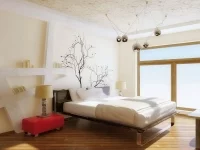 The expert also points to the special advantages of plaster coatings. “Modern mixtures, thanks to the special structure of micropores, ensure exceptionally effective "breathing" of the wall surface. They optimally regulate the amount of moisture in the air, maintaining a comfortable and healthy microclimate in the rooms. When choosing a plaster, it is also worth paying attention to whether it is resistant to the development of fungi and mold. – says Maciej Iwaniec from Baumit.
Good basics
“In order to achieve the best adhesion of the plaster, it is worth choosing high-quality underlays, adapted to both the type and absorbency of the substrate, as well as the plaster applied on it. Under gypsum mixtures on absorbent substrates, e.g. cellular concrete, use a reinforcing agent to level the substrate's absorbency. On non-absorbent surfaces, e.g. concrete, primers with the addition of quartz sand, which increases adhesion through roughness. Under most cement-lime plasters, it is necessary to make a preliminary rendering, which improves adhesion. Light, single-coat plasters require only wetting the substrate with water. We should remember this especially when we plan to decorate with ceramic tiles or natural stone. These types of cladding require a durable substrate that can support their weight.” – says the Baumit expert.
Depending on the needs, it is also worth using mixtures developed for specialized use. “During the preparation of the walls, a quick-setting mortar, intended for embedding installation pipes and electric wires, as well as fixing corners, profiles and plaster strips, will certainly be useful. Some plaster mixes also have a composition that increases their thermal insulation, for example by using perlite or polystyrene granules in them.” – says Maciej Iwaniec from Baumit.
Starting the planned wall revolutions, we face a wide selection of decorating techniques. Let us remember, however, that without proper surface preparation, the dream arrangements can lose a lot of their beauty and durability. The choice of high-quality plasters and mortars and their proper priming is an extremely important step towards a successful, durable and stylish wall decoration.