
What you should know about wood on underfloor heating
Installation of a wooden floor on a heating system has been very popular for many years. "Underfloor" is a very convenient solution that can be used for years without any problems. For this to happen, it is worth paying attention to it and preparing well for the investment. In this case, the saying that prevention is better than cure is extremely justified. Here is a handful of valuable information that will certainly be useful to every investor.
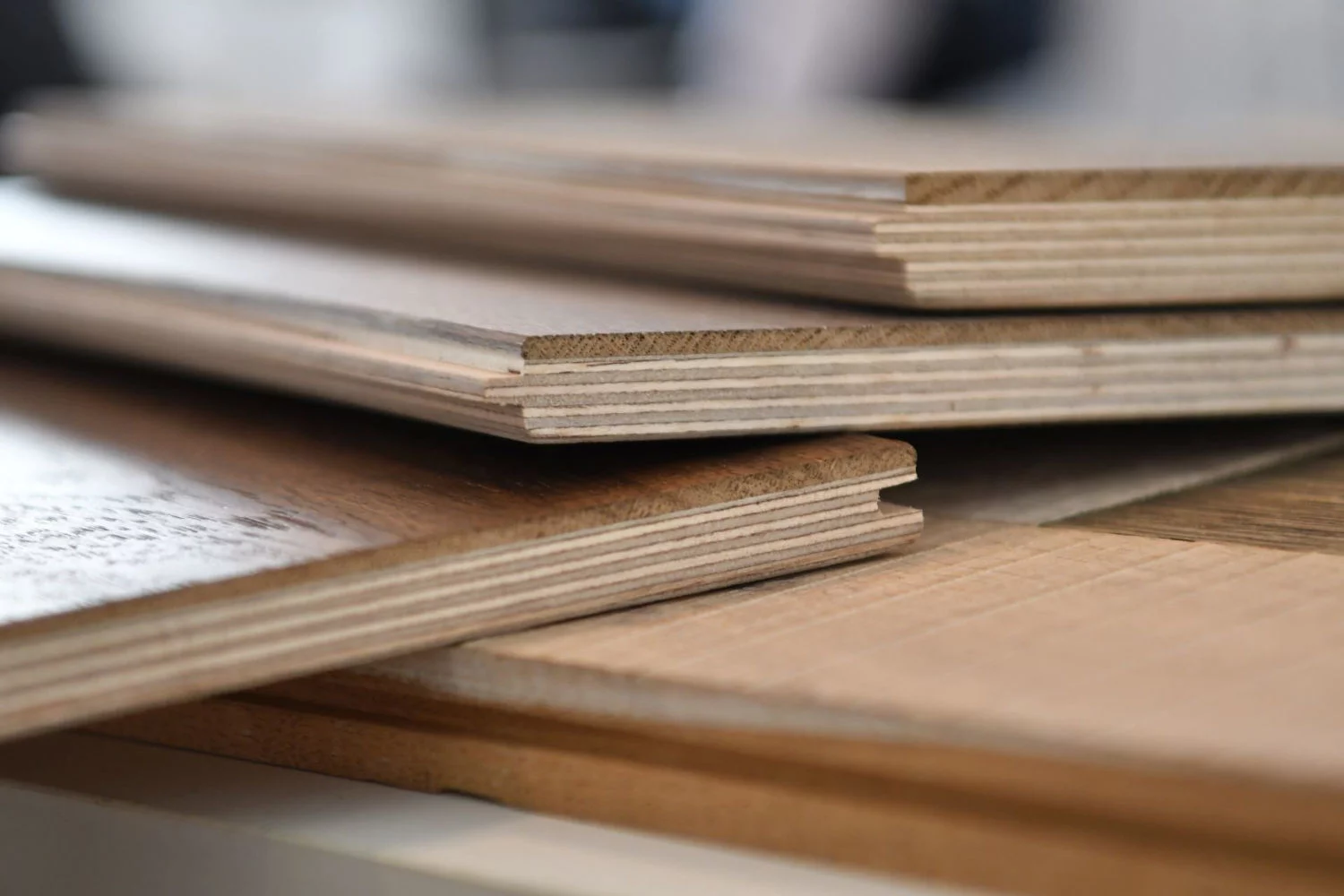
Engineering material (layered)
photo: Chapel Parket Polska
As is well known, wood is a natural material with hygroscopic properties. What does it mean? Well, it reacts to the conditions in its environment (including humidity and temperature). This does not mean, however, that installation on underfloor heating is impossible. On the contrary, you should read some valuable information.
What's with this wood?
- Solid wood, which is characterized by high thermal resistance, is not recommended for "floor tiles", which makes heating uneconomical and inefficient. At the same time, solid wood is more susceptible to the "work" of wood than engineered material, i.e. layered material - emphasizes Sebastian Kos, Chapel Parket brand expert.
The latter is made by combining several layers of wood (whose grains are arranged perpendicular to each other) into one durable element. This construction significantly reduces the "work" of wood. At the same time, the layered construction does not significantly inhibit the flow of heat. Floors made of engineered material are more resistant to changes in humidity and temperature.
Does thickness matter?
Before we make the final decision, we should pay attention to several factors, and actually - to know the values of the relevant variables. According to the DIN 4725 standard, materials with a heat conduction resistance value not exceeding 0.15 m 2 K/W (square meter -Kelvin/W) may be installed on water floor heating.
- The term "heat conduction resistance" means the degree of insulation of a given material: the lower it is, the more heat will be conducted through the material - explains Paweł Bekas, an expert of the Chapel Parket brand.
The value of thermal resistance is influenced not only by the thickness of the wood, but also by its thermal conductivity (heat conductivity coefficient), expressing the thermal insulation properties of the raw material. The higher its value, the more heat will flow through the material.
- As you can see, the thickness of the wood is important, but the value of thermal conductivity is also important, because it directly affects the thermal resistance. For example: the criteria of the aforementioned DIN 4725 standard are met by both the Chapel Parket In Beteween layered floors with a thickness of 15 and 20 mm - adds P. Bekas.
And the color?
It is worth remembering that investors who plan to install light wood on the "floor" should take into account the fact that these shades will more clearly show the natural shrinkage process of the material.
- In such a material, the gaps (although they are literally up to a millimeter wide) will be more visible. However, you do not have to give up floors in bright colors. The solution is to choose boards with a micro-bevel, thanks to which individual boards will be distinguished, and the effects of the natural "work of wood" will be less visible - informs Sebastian Kos.
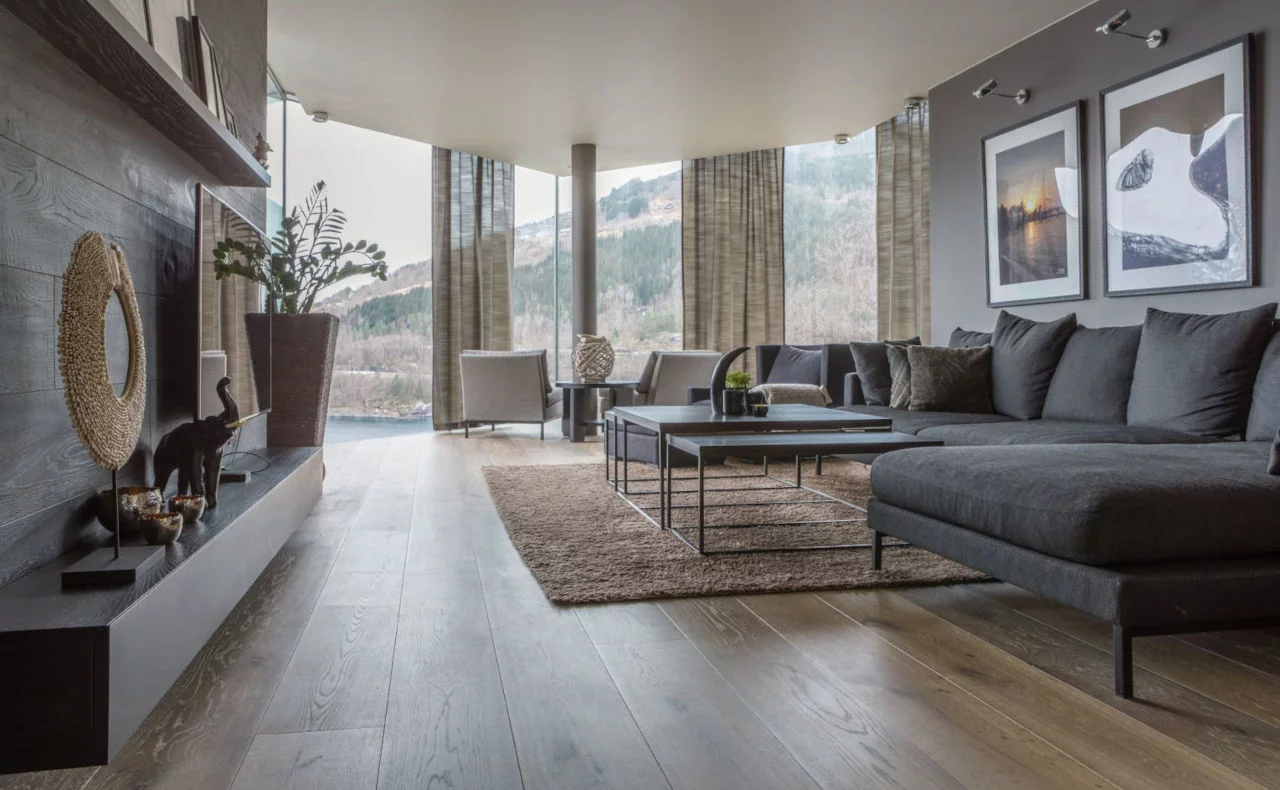 Chapel Parket, color 17th century white
photo: Chapel Parket Polska
 photo: Chapel Parket Polska
Layered or solid?
The choice of wood dedicated to underfloor heating is very large. There are not only planks available on the market, but also planks and even coffers that can be successfully mounted on the "floor tiles".
- These elements are distinguished not only by interesting colors, but also by texture. Chapel Parket In Between's engineered floors are planed so that the grain of the wood is exposed and the wood gives a three-dimensional impression. The series consists of elements in 56 colors, so everyone will find the right solution for themselves - says Sebastian Kos, an expert of the Chapel Parket brand.
Parquet fitter and heating?
- It is best to entrust the assembly of the floor to an experienced person who not only has the appropriate knowledge, but also the appropriate tools allowing, for example, to assess the humidity of the screed. It is important to entrust the installation of wood on the "floor tiles" to a parquet fitter, and not to a "handyman" - says Paweł Bekas.
Wood is a noble raw material that requires proper treatment. Considering that the installation of any floor made of this material is a long-term investment, it is worth betting on a professional in the wood industry.
However, before the parquet fitter starts work, the floor must be heated in order to remove moisture from the screed. This operation is necessary: if we omit it, excess moisture will be absorbed by the wood.
- Contrary to appearances (and the name), the process of heating the floor itself is not complicated. It consists in maintaining a certain temperature of the heating system in the room where the wood will be installed. The investor should simply follow the instructions provided with the floor, and document the subsequent activities in a special protocol. The whole process takes about a month. It is much easier to warm up the floor than to suffer the consequences of neglecting to do so, stresses the representative of the Chapel Parket brand.
An additional argument in favor of carrying out the heating of the floor (and drawing up a report on this activity) is the fact that this document may be an important element of the guarantee for the floor.
What about the temperature?
It should not exceed 28 degrees Celsius, it is also worth remembering that too high temperatures dry the wood, and rapid and large fluctuations can lead to its damage.
- The room temperature should not be higher than 28 degrees Celsius. Considering that the entire floor heats up, there is no fear that the room will be too cold. The optimal level of temperature is in the range of 18-22 degrees, while the humidity should be between 45 and 60 percent. These conditions are suitable for both the household members and ... the floor itself - explains Sebastian Kos.
When talking about the temperature, it must be emphasized that (both at the beginning of the heating season and at its end) its value must be regulated successively, at the beginning of the heating season by a maximum of 1 or 2 degrees per day; the idea is to avoid temperature "shock".